

The Real Reason You’ve Lost Desire (It’s Not Menopause)
Sex and intimacy educator Xanet Pailet opens up about trauma, emotional safety, ‘lost desire’ after menopause, and why intimacy is a skill anyone can learn.
What if the real reason you’ve lost desire has nothing to do with your hormones, and everything to do with whether you feel safe? That’s the central question at the heart of this conversation with Xanet Pailet, a sex and intimacy educator, coach, and author whose personal journey is as compelling as any of the frameworks she teaches.
A trained healthcare lawyer who spent 26 years in a sexless marriage, Xanet made a radical decision at 50: to look unflinchingly inward.
What she discovered launched a 15-year career helping individuals and couples rebuild the emotional and physical connection they thought was gone for good. Her latest book, The Sex and Intimacy Repair Kit, distills everything she’s learned into practical, learnable tools.
Here are the most powerful ideas from our conversation.
Emotional Safety Comes Before Everything Else
If there’s one idea that runs through everything Xanet teaches, it’s this: for women, emotional safety is not a nice-to-have in a relationship. It’s the prerequisite for desire itself.
“In order for us to be in a sexual relationship where we can fully express ourselves without shame or self-judgment, we have to feel incredibly emotionally safe with our partner,” she explains. “That’s an absolute requirement.”
When that safety is absent, the nervous system does something very specific: it shuts desire down entirely. And this is not something we can necessarily control. It’s a protection mechanism. “It’s a nervous system response to not feeling emotionally safe or safe in your body,” Xanet says. “I don’t feel safe, so I’m going to shut this down. I’m not going to feel desire.”
“A lot of women have never actually felt what it’s like to be emotionally safe. This is because we grew up in childhoods where we couldn’t be emotionally honest and vulnerable.” — Xanet, Sex & Intimacy Educator
Many of us grew up in environments where it wasn’t safe to express feelings, pain, anger, or disappointment—and we carry that blueprint into our adult partnerships. We learn early to suppress, to manage, to perform. And then we bring all of that unspoken history into the most intimate spaces of our lives and wonder why connection feels so hard to sustain.
Recognizing the pattern, Xanet says, is genuinely the first step. Just becoming aware that the walls you’ve built were constructed for a reason, and that reason no longer has to run the show.

The Men vs. Women Safety Paradox
One of the most clarifying moments in our conversation was when Xanet laid out a dynamic that causes enormous pain in heterosexual relationships, and almost nobody talks about it directly.
For many women, emotional safety has to come before sex is possible. For many men, sex is actually what creates the feeling of emotional safety — the moment of opening up, of vulnerability and connection. Two people. Two completely opposite sequences. Both are convinced that the other one is withholding something.
“I need sex to feel emotionally safe. She needs to feel emotionally safe to have sex. What do you do with that?” Xanet asks, with a knowing laugh.
Her answer isn’t to pick a winner. It’s to create the conditions for both people to feel safe, independent of sex, so neither person is using intimacy as a prerequisite or a reward. She’s also clear-eyed about the power dynamic at play: women, she points out, tend to hold the deciding power around whether sex happens at all. That’s not a weapon, but it can easily become one — and she hears about it often from the men she works with, who describe sex being used as something dangled or withheld, which creates its own cycle of resentment and distance.
The way through, she says, is to make emotional safety the shared goal rather than the negotiating chip. Once that foundation exists, desire and connection often begin to flow naturally again.

What Safety Actually Feels Like in the Body
We talk a lot about emotional safety as a concept. But what does it actually feel like when you have it? Xanet’s answer surprised me with its simplicity.
On the outside, she says, it looks like this: you can tell your partner what you’re really feeling without the fear that you’ll be judged, dismissed, or met with someone trying to fix you right away.
You can say something that might hurt, because people do hurt each other in relationships, and trust that it won’t combust into a fight that leaves you feeling more alone than before. You can be honest about your triggers, your needs, and your fears.
But it’s the inner description that stayed with me longest. Xanet calls it attunement.
“Think about two tuning forks resonating at the same note, at the same vibration. That’s what emotional safety feels like. When there’s dissonance between those forks — that’s what it feels like when it’s gone.” — Xanet
It’s a description borrowed from physics, but it maps perfectly onto the lived experience of feeling truly met by another person, or the creeping unease when you’re not. And it connects to something important: that emotional disconnection is never entirely one-sided. “If you are feeling emotionally disconnected from your partner,” Xanet says, “I can guarantee you they are feeling it too. It is never, ever one-sided. They may not be able to express it — but it’s there.”
This is also connected to attachment theory and the idea that our earliest experiences of being “tuned in to” by a caregiver create the template for how safe we feel being truly known by another person.
Many of us were misattuned as children, which means that being deeply seen as an adult doesn’t just feel unfamiliar, it can feel actively threatening. Learning intimacy, then, is, in some ways, learning a brand-new language.
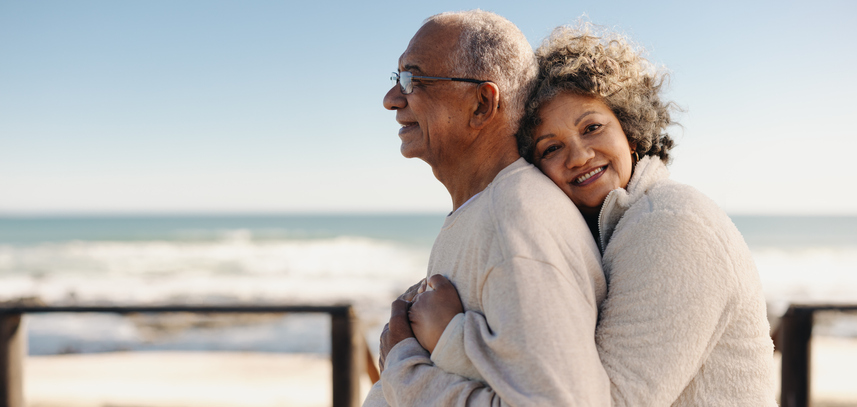
The Truth About Menopause and the Question of Lost Desire
We’ve been sold a story: that menopause is where women’s desire goes to die. Xanet doesn’t buy it — and she has 15 years of client work to back her up.
Her first observation is blunt: a significant number of women who report lost desire were never having sex they actually enjoyed in the first place. “They’re not getting what they want. They’re not being touched the way they want. It’s very performative.”
There’s pressure, obligation, and a quiet resentment that builds over years of sex that doesn’t feel good but feels too complicated to address. When perimenopause arrives, it becomes a socially acceptable exit from something that was never really working. “It becomes the endpoint in the relationship.”
But here’s what gives her away. Watch what happens when that same woman finds herself newly single. “Their desire goes straight up again,” Xanet says. “And part of that is new relationship energy. And I’m here to tell you: new relationship energy does not stop after menopause.”
“People say there’s no new relationship energy after menopause. That is completely false. I’ve seen it in 60-year-olds, 70-year-olds. It’s dopamine-driven. It doesn’t care what your estrogen level is.”— Xanet
The real work, she argues, is creating the emotional conditions within a long-term relationship — safety, attunement, genuine desire — that allow both people to stay connected over decades. The couples she works with at her international retreats are often 25 or 30 years in. They love each other. But love and connection, it turns out, are not the same thing. And one can exist for a long time without the other.
Intimacy Is a Skill. You Can Learn It.
Perhaps the most liberating idea Xanet offers is also the simplest: intimacy is not a personality trait you’re born with or without. It’s a set of skills. And skills can be learned.
“People think this is an innate thing — like I either can do it or I can’t,” she says. “The truth is that both intimacy skills and sex skills are skills.”
This matters enormously because the alternative belief, that some people are just “good at relationships” and others aren’t, leads nowhere. It makes change feel impossible, and self-examination feel pointless.
Why do the work if the outcome is fixed? Xanet’s retreats work with couples on the verge of separation, and she describes helping them reach genuine reconnection within 4 or 5 days. “We’re a couple again. We feel connected. We’re having some level of physical intimacy we haven’t had in 10 years.”
Some of the specific skills she teaches: empathetic listening, self-soothing when triggered, communicating needs without shame, and, perhaps most critically, knowing how to repair after a rupture. “The difference between a couple who is going to sustain and grow versus one that’s going to stall is learning how to repair conflict rather than sweep it under the rug.”
Most of us were never taught this. We were shown either avoidance or escalation, and we picked whichever felt safer. Learning the third path, genuine repair, can change everything.

For Women Starting Over: Look Inward First
For women who find themselves single — whether by choice or not — Xanet’s advice is consistent, and it starts with an honest reckoning rather than a rush toward the next relationship.
“Really take a hard look at how you showed up and what work you need to do, because if you don’t, there’s a hundred percent chance the pattern will repeat in the next relationship.” She’s not trying to be harsh. She’s been there herself. “I started doing that work and thought: how did he even stay with me as long as he did? The way I treated him. The ways I emasculated him. The power dynamics I created. All of that.”
She speaks from personal experience in another way, too. After leaving her marriage, Xanet entered what she describes as the most emotionally abusive relationship of her life. It wasn’t a failure of judgment. It was a wound playing itself out. “I was playing out a childhood wound I’d never been able to work through in my marriage. It was incredibly painful. But I learned so much about myself.”
Her reframe of those difficult post-divorce relationships is generous and useful: they’re not evidence of failure. They’re the classroom. “Relationships are really there to help us heal our childhood wounds. The best ones do that. It takes work. And sometimes it’s painful. But it is an opportunity to heal.” The mistake isn’t choosing the wrong person. The mistake is not doing the reflection that would lead to a different choice.

The Red Flags We Keep Choosing
One of the most honest threads in our conversation was about the patterns we repeat — and specifically, the attraction to red flags that feels, frustratingly, like magnetism rather than choice.
Xanet is candid about her own history here. Her mother was a narcissist. Her ex-husband had strong narcissistic traits. After her divorce, she found herself drawn again and again to partners with similar qualities. Not because she didn’t know better, but because the familiarity of the dynamic was wired deep. “You are magnetized to it,” she says simply.
The path out isn’t to become suspicious of every attractive quality in a new person. It’s to get specific about your own pattern and to understand what you’re drawn to, why, and what early signals you’ve learned to overlook.
She distinguishes, too, between narcissism as a clinical pattern and a small degree of self-assurance and confidence that can actually be healthy and attractive. “We all should be a little bit narcissistic,” she says. The work is in knowing the difference and catching yourself before you’ve invested deeply in someone who confirms your wound rather than helping you heal it.
This, she adds, takes time. She was single for 15 years after her divorce before finding the right partner. Not celibate. She had relationships, but each one taught her something and required her to be more honest with herself about what she was looking for and what she kept avoiding. “There’s a healing process that needs to happen. You need some time and energy to heal, and you need to have some new experiences, before you’re really ready to drop into the relationship you actually want.”

Two Lenses to Change How You See Everything
We close every episode of Her New Lens by asking guests for a perspective shift and a new lens to try. Xanet offered two.
The lens of pleasure. Drawing from her first book, Living an Orgasmic Life, Xanet invites us to look at our entire lives through the question: Where is the pleasure? “Pleasure is our birthright,” she says. Not just sexual pleasure. Pleasure in food, in movement, in beauty, in rest, in the texture of an ordinary Tuesday. In a world that often rewards women for their endurance and self-sacrifice, reclaiming pleasure as a serious, daily practice is quietly revolutionary.
The lens of vulnerability. This one comes from the word itself. Break “intimacy” down phonetically, and you get: into-me-see. “Am I allowing you to see into me? And are you allowing me to see into you? That’s what intimacy really means. I let you see all of my stuff: my pain, my hurt, my shame, all of that.”
It’s a small reframe, but it’s one of those ideas that, once heard, changes how you experience every close relationship you have. How often do we go through the motions of intimacy — sharing meals, sharing beds, sharing decades — while keeping the most tender, most frightened parts of ourselves carefully out of sight? The lens of vulnerability asks: what would change if you let yourself actually be seen?
Questions to Reflect On
After conversations like this one, I always find it useful to sit with a few questions rather than rushing to implement everything at once. Here are some that came up for me and that you might want to bring into your own journaling or reflection practice:
On safety: When did I last feel truly emotionally safe with another person? What did that feel like? And what made it possible? Are there ways I’m currently withholding safety from my partner, or from myself?
On desire: If I’m honest, has my desire decreased? Or has it just found nowhere safe to land? What would need to change in my relationship (or in myself) for desire to feel genuinely possible again?
On patterns: What is the through-line in my most difficult relationships? What role did I play? Not to blame myself, but to understand myself more clearly? What wound might those dynamics have been trying to surface?
On vulnerability: What parts of myself do I keep hidden, even from people I love? What would it mean — and what would it cost — to let someone truly see those parts?
There are no right answers here. But as Xanet says, the awareness itself is the beginning of everything.

🌸Thanks for Reading
I’m so glad you stopped by. Rose Colored Glasses is a space where I share reflections, insights, and stories to help you shift the lens through which you see your life, your relationships, and the endless possibilities around you.
If something here resonated, it may be more than coincidence. Often, these moments of recognition are the beginning of meaningful change.
Through my private coaching and The True Lens Method™, I work with women who are ready to release old patterns, reconnect with their inner clarity, and step into a new chapter—one rooted in self-trust, emotional freedom, and aligned love.
If you feel called to explore what this could look like in your own life, I invite you to take the next step.
Schedule a Private Consultation
Or, if you’d simply like to stay connected, you can subscribe to my newsletter for weekly reflections and inspiration.
Your next chapter begins with a new way of seeing.
With love,
Tricia



Leave a Reply
Want to join the discussion?Feel free to contribute!