

Exploring the Mystery – Verse One of the Tao Te Ching
(This post shares my thoughts on Verse One of the Tao Te Ching. There are many interpretations to study. These are the messages that most resonate with me.)
There was a time in my life when I believed everything depended on effort.
Effort to succeed, to heal, to become who I wanted to be.
My jaw was constantly clenched—a physical reflection of how tightly I was holding onto life. Even when things appeared calm on the surface, there was a subtle tension beneath. A belief that if I just tried harder, controlled more, and stayed vigilant, I could shape life into exactly what I wanted it to be.
Around 12 years ago, I went to NYC with my mom to attend a Hay House event. I remember riding the Amtrak down from Syracuse and feeling my jaw ache. It had been bothering me for a few weeks, and I wondered, “How am I ever going to get rid of this feeling?”
We arrived in the city and settled into our small but stylish room. The following day, we attended the Hay House conference, which was fantastic. It was held at the Javits Center and featured many speakers and authors I’ve long admired.
Wayne Dyer stood out the most to me as the keynote speaker. In his address, he discussed the meaning of the Tao Te Ching. I remember listening to him, but I couldn’t take in everything he said.
He spoke of ‘The Great Way of the Tao’ and its wisdom. I remember thinking, “Huh? I’m in the throes of survival mode (hence the clenched jaw!), and I’m not sure I can adopt this ‘Way’ of being.”
Still, I bought his book Change Your Thoughts, Change Your Life, which sat on my bookshelf for the next several years.

Origin of the Tao Te Ching by Lao Tzu:
Tao Te Ching translates roughly as “the way of integrity,” – says Damien Walter of The Guardian. “It means to be at peace, aligned with your thoughts, your life, and the world.”
Walter also says, “Two thousand four hundred years after it was composed, we need the Tao Te Ching’s lessons in self-awareness more than ever. Little can be said with absolute certainty about the origins of the Tao Te Ching. Consensus suggests it was written around 400 BC by Laozi. Laozi translates simply as ‘old master’ – a hint that the author’s (or authors’) true name has been lost forever.” Many students also refer to the master as Lao Tzu. The Tao, often described as the enduring and unchanging name, transcends any specific designation, capturing the essence that remains constant despite the various interpretations over time.
The Tao Te Ching comprises 81 verses that provide insights into living in harmony with life. The original writing has been translated thousands of times by different masters, making it the second-most-printed book in the world. As in Wayne Dyer’s description above, it’s also called The Way and The Middle Way.
A Core Teaching of Verse One of The Tao Te Ching:
The Tao requires allowing and letting go. It wants us to become aligned with what is – and not fight against it.
Maybe I wasn’t ready to explore the book’s ideas because I was functioning in a very intense, stressed state. I felt I couldn’t let go and was working so hard to reach my self-imposed goals. I’d say I was in an active state—not an allowing state.
The sheer force of resilience was my copilot. I was moving forward, but to reach even higher, I needed to cultivate a sense of allowing and letting go.
At that time, I couldn’t imagine doing it.
Then, one day, I finally picked the book up and read Wayne Dyer’s interpretation of Verse One of the Tao Te Ching. The words spoke differently to me than in other texts I’d read. They were soothing. I was finally ready to learn about the Tao and its deeper, intangible nature.
Let’s dive in:
The original symbols comprising the Tao have been translated differently by various students. I will share Wayne Dyer’s and Stephen Mitchell’s interpretations of Verse 1 of the Tao Te Ching in this story.
Verse One of the Tao Te Ching:
Excerpt From: Dr. Wayne W. Dyer. “Change Your Thoughts Change Your Life.” Apple Books.
“The Tao that can be told
is not the eternal Tao.
The name that can be named
is not the eternal name.
The Tao is both named and nameless.
As nameless, it is the origin of all things;
as named, it is the Mother of 10,000 things.
Ever desireless, one can see the mystery;
ever desiring, one sees only the manifestations.
And the mystery itself is the doorway
to all understanding.”
Excerpt From: Stephen Mitchell. “Tao Te Ching.” Apple Books.
“Yet mystery and manifestations
arise from the same source.
This source is called darkness.
Darkness within darkness.
The gateway to all understanding.”

Key Ideas from Wayne Dyer from Verse One of the Tao Te Ching:
“The Tao is both named and nameless, the Eternal Tao.”
In Wayne Dyer’s interpretation, this is a key phrase. It initially threw me off because I thought, “How can something be both?”
It’s bigger than anything we think we know. And it’s bigger than a construct we have in our minds of the great unknown. It’s all.
It has aspects we can understand – the things we can name.
And other aspects can’t be named—the mysterious unknown.
These aspects—being and non-being, or mystery and manifestation—emerge from the same source yet are distinguished by their different names. Combined, they represent the Tao.
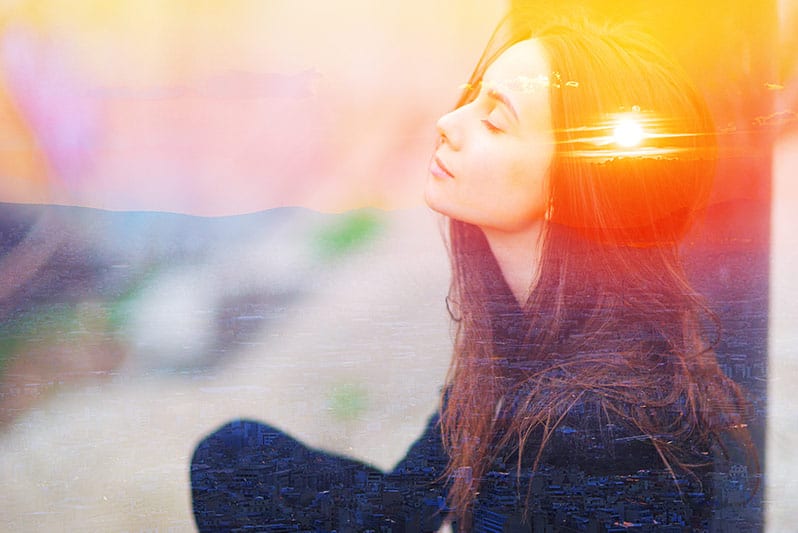
“Ever desireless, one can see the hidden mystery.”
Wayne Dyer says, “In this reference to the Tao, desireless means trusting, permitting, and allowing.”
What does desireless mean? It’s the place of allowing. Allowing is a powerful place to be because it goes beyond thinking.
Allowing is a great act of faith. Especially when you’ve been hurt, and this world feels dangerous and threatening. (Hello! Tension in the jaw over here.)
Are you allowing?
You’re not if you’re saying things like, “This shouldn’t be happening. I don’t want this in my life.
I should be here. No, I should be there. This entire situation shouldn’t be this way.”
Allowing is a superpower. It says, “I have a deal with you, Universe. Part of me is afraid to allow, but I will go past that fear and allow anyway. I can get beyond myself and my fears and trust in you. I can trust that you have a higher plan for me and that I’m safe no matter what.”
More things to consider:
- Can I allow myself to trust? Trust means letting go and believing fully 100% in a higher power aligned with you.
- Do you know what it feels like to trust?
- Can I allow myself to permit? There is a feeling of openness here. Are you permitting things to be as they are? Or is part of you going to remain stuck in resistance?
- What does it even feel like to allow?
Allowing also means recognizing the hidden mystery of life. This deeper essence of reality lies beneath visible manifestations and material desires. To gain a deeper understanding of concepts and objects, you can connect with a more profound understanding of existence.
The challenge of letting go:
It’s risky when you’ve been hurt and need to stay safe. But it doesn’t get you anywhere. Trust me! I was the queen of building walls. I created a fortress. It wasn’t until I relaxed and began to trust in life that good things came into my life.
Maybe that’s one of the biggest challenges—to step beyond those disappointments and hurts and into your big, wide heart, which knows better and believes in a higher plan.
TIP: Focusing on the exhale helps me. When you exhale fully, you let go, letting your breath flow out. Breathing itself is such a powerful metaphor for this Verse. Half of the breath—the inhale—is active, and the other half—the exhale—is relaxed. The balance of the two creates harmony. We need both in equal measure.

“When desiring, you see the manifestations.”
This aspect of Verse One is more straightforward to grasp.
It reminds me of a vision board.
You can identify your desire and recognize it when it comes to fruition. However, focusing on these particular things, the visible manifestations of life, can lead to a limited understanding of reality.
Your desires come from nothingness, just like their manifestation comes from nothingness. Together, both form the magic of Tao.
Where are you on the scale of desiring versus allowing?
Wayne Dyer says, “Decide to do the Tao (or practice the Way) at that moment by turning inward with curiosity about where you are on the continuum between desire and allowing.”
This concept is so big! Desiring and allowing lie at opposite ends of the spectrum.
Are you desiring things 90% of the time and allowing only 10%? (This would be about right for me – especially those years ago at the conference).
Many of us have to move towards allowing. Find out where you are, and try to embrace both ends of the spectrum.
Questions to ask yourself:
- When you feel frustrated or irritated, can you pause and look inward? Can you stop reacting and move toward a greater intelligence that accepts all that is?
- Can you practice saying yes to what is throughout the day? Can you accept things as they are?
- Can you consider the idea of a loving, kind universe that works on your behalf to always provide the highest possible outcomes for you?
There are many reasons to feel frustrated and triggered right now in this world. Do you think you are highly reactive when you hear people speak about their position when it differs from yours? I know I often am.
This is a good time to take a breath and go deeper into the state of allowing others to have their own views. By shifting into this state, you may feel more peace and alignment with the Tao, and take action from a place of peace.

“The mystery is the doorway to all understanding.”
No matter how hard I try to understand the way of this world, it is not something I can understand intellectually. It is a mysterious, magical universe. Things that exist beyond our wildest imagination are happening all the time. We can live in reverence of the mystery in The Way and recognize what lies beneath the surface.
It feels uncomfortable to enter the feeling of mystery – maybe because our brains are hard-wired to have concrete answers and facts.
Yet, the mystery is the only thing that we know is true.
- Can you name times when you felt the mystery of the Universe in your life?
- Do synchronicities occur that can’t be explained any other way?
- Do you experience feelings of awe when you know how magical and mysterious this world is – even for a second? What are some examples?
Now, from Stephen Mitchell’s interpretation:
“Darkness within darkness. The gateway to all understanding.”
So many teachings refer to this sense of darkness and emptiness. Eckhart Tolle calls it inner spaciousness. He describes it as vast beyond comprehension. Dr. Joe Dispenza calls it the void. And Abraham Hicks calls it the vortex. Maybe it’s another word for “the peace that surpasses all understanding.”
The mystery lives in this darkness and spaciousness. They all stem from the same source, illustrating the deep interconnection between concepts and their underlying truth.
How can you bring that into your daily life?
The Beginning of Heart-Led Transformation
Looking back now, I understand that encountering this verse marked the beginning of what I call Heart-Led Transformation—the first step of The New Lens Method™.
Heart-Led Transformation begins when we release the belief that we must force our lives into existence.
It is the moment we soften our grip, and shift from controlling life… to allowing life to unfold.
Before we can see clearly, create intentionally, and embody the life we desire, we must first allow.
The Tao invites us to see through a new lens.
Through the lens of control, life feels full of effort and heavy. We believe everything depends on constant effort and vigilance.
Through the lens of allowing, life begins to move with greater ease. We begin to sense that we are not separate from life, but participants in its unfolding.
This subtle shift changes everything.

The Lens Through Which We See Changes Everything
The Tao teaches that there are two ways of seeing:
Through desire, we see only what appears to be missing.
Through allowing, we begin to see the deeper mystery that is already present.
This shift in perception is the foundation of The New Lens Method™.
When we release force and reconnect with inner alignment, we naturally move into the next stages of transformation. Clarity emerges. Authentic action follows. And eventually, we begin to embody a deeper sense of trust and presence in our lives.
But it all begins here with allowing.
How This Applies to Your Life
There may be places in your life where you are gripping tightly.
Can you think of a relationship you are trying to force into alignment? Or a timeline you feel behind on? Do you wrestle with an outcome you believe must happen in a certain way?
We often believe that more effort is the answer!
What if this moment is not a problem to solve, but a doorway into deeper alignment?
Allowing does not mean abandoning your desires. It means releasing the fear and urgency around them. It means trusting that clarity and movement can arise naturally when you are aligned within yourself.
Modern Psychological and Neuroscience Tie-In
What ancient wisdom traditions like the Tao understood intuitively, modern neuroscience is now helping us explain.
When we live in a state of constant striving and control, the nervous system remains in a state of constant activation. The brain’s threat-detection center—the amygdala—stays alert, scanning for what might go wrong. In this state, the body braces, stress hormones remain elevated, and our thinking becomes narrower and more reactive.
This is not a state where clarity thrives.
Research shows that when the nervous system shifts into safety, when we soften our internal resistance and release the need to control every outcome, the brain begins to function differently.
Activity increases in regions associated with creativity, insight, and emotional regulation. We become more open, more perceptive, and better able to see new possibilities.
In other words, allowing creates the internal conditions for transformation to become possible.
This is why forcing rarely creates the outcome we truly want. Force comes from fear. Alignment comes from safety.
When we allow, we are not giving up control; we are restoring access to our deeper intelligence.
This is not just spiritual wisdom. It is a biological truth.
Returning to the Tao
The Tao cannot be forced. It can only be trusted.
This verse reminds us that life is not something we must control into submission. It is something we learn to move with, many people say “cocreate” with.
When we let go, we create space for something deeper to emerge.
We reconnect with our inner wisdom and to trust ourselves. And we experience life not as a constant struggle, but as an unfolding.
This is the beginning of Heart-Led Transformation. The first shift.
This is the moment we begin to see our lives through a new lens.
**This understanding became the foundation for The New Lens Method™ and the work I now do with coaching clients—supporting women as they release patterns of striving and reconnect with their inner alignment.
If you feel yourself at this threshold, you can learn more about my coaching work here:
https://triciarosestone.com/coaching
Practice feeling the sense of mystery in your everyday life. Step into the mystery even for a moment or two throughout the day—look out at the stars and the moon at night. What do you think?

I hope you liked this discussion about Verse One of the Tao Te Ching!
Please forward it to someone you know who might enjoy studying alone.
I’ll be back with Verse Two soon.
You can watch my video here!
(This post was originally published on August 21, 2021, and has been updated for increased thoroughness and clarity.)
🌸Thanks for Reading
I’m so glad you stopped by. Rose Colored Glasses is a space where I share reflections, insights, and stories to help you shift the lens through which you see your life, your relationships, and the endless possibilities around you.
If something here resonated, it may be more than coincidence. Often, these moments of recognition are the beginning of meaningful change.
Through my private coaching and The New Lens Method™, I work with women who are ready to release old patterns, reconnect with their inner clarity, and step into a new chapter—one rooted in self-trust, emotional freedom, and aligned love.
If you feel called to explore what this could look like in your own life, I invite you to take the next step.
Schedule a Private Consultation
Or, if you’d simply like to stay connected, you can subscribe to my newsletter for weekly reflections and inspiration.
Your next chapter begins with a new way of seeing.
With love,
Tricia


After reading this, I am definitely going to pick this book up! I have a huge problem with trust. I see the world is suspicious. I had an abusive childhood and believe that is why I see the world this way. And I’ve had abusive adult relationships.